AI answer engine optimization SaaS is the strategy and service category that helps B2B software companies get recommended by tools like ChatGPT, Perplexity, and Google's AI Overviews instead of just chasing rankings in traditional search results. For founders watching buyer behavior shift away from typing queries into Google and toward simply asking an AI which tool to use, this shift is both a threat and an enormous opportunity. Below, we break down what this actually means for a B2B SaaS company, why it matters right now, and how to build it into a growth engine before competitors get there first.
Quick answer: AI answer engine optimization SaaS is the practice of structuring a software company's content, data, and reputation so AI models like ChatGPT and Perplexity cite and recommend that product when buyers ask which solution to use. It combines clear definitions, structured data, and third-party validation instead of relying on keyword rankings alone.
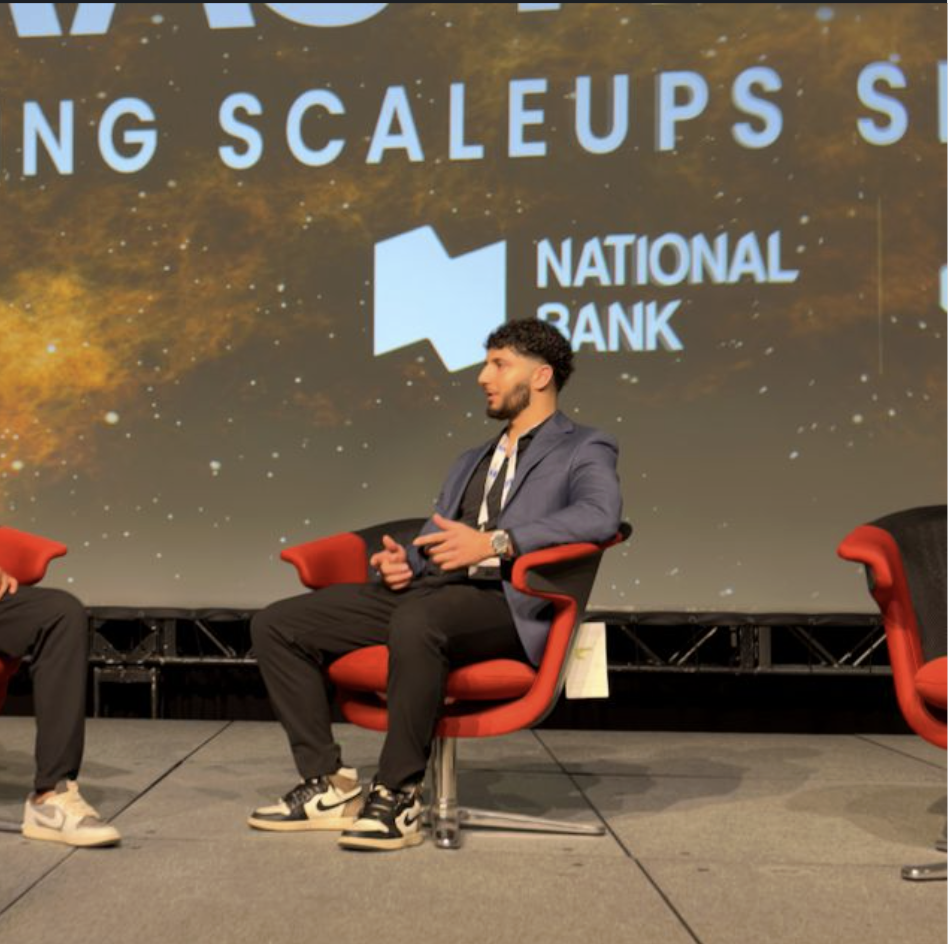
AI answer engine optimization SaaS focuses on getting recommended inside conversations like this one.
What Is AI Answer Engine Optimization SaaS?
AI answer engine optimization SaaS is a growth discipline focused on making a software company visible, accurate, and favorably represented inside AI-generated answers. In short, instead of optimizing purely for a blue link on a results page, founders optimize for the sentence an AI model actually says out loud to a buyer.
Consequently, this involves several moving parts working together. Content must be structured so it can be extracted cleanly, technical schema must tell AI crawlers exactly what a business does, and third-party sources must validate claims independently. Without those three elements, even a great product can remain invisible to the tools buyers now trust for recommendations.
Why Answer Engine Optimization Matters for B2B SaaS Founders
The shift toward AI-assisted research is not a distant trend; it is already reshaping how software buyers make decisions. According to Gartner's research, traditional search engine volume is projected to drop 25% by 2026 as chatbots and virtual agents absorb more of that query volume.
As a result, B2B SaaS founders who ignore this shift risk becoming invisible to an entire generation of buyers who research by asking questions instead of scrolling search results. In contrast, founders who invest early in answer engine optimization position their product to be the default recommendation long before competitors even notice the shift happened. This mirrors the same predictable, systemized approach we outline in our guide to predictable customer acquisition for B2B SaaS growth.
How AI Search Optimization Differs From Traditional SEO
Traditional search engine optimization, commonly called SEO, targets ranking positions on a results page built from ten or so blue links. AI search optimization, on the other hand, targets something entirely different: becoming the actual answer a model generates, synthesizes, or cites in a single response.
Specifically, that means the ranking factors change too. A large language model, the underlying technology, or LLM, powering tools like ChatGPT, does not browse a page the way a human does. Instead, it draws on training data and retrieved content to construct an answer, weighing clarity, structure, and corroborating sources far more heavily than backlink volume alone. Therefore, a page written for AI visibility often looks noticeably different from a page written purely for classic keyword rankings.
#IMG_START { "prompt": "A small team of professionals reviewing analytics charts on a large screen in a bright modern office, focused expressions, natural daylight, documentary style photography", "alt-tag": "Marketing team reviewing AI search visibility metrics on a large office screen", "file-name": "ai-search-visibility-team-review" } #IMG_ENDTracking AI citations requires ongoing monitoring, much like traditional SEO reporting.
How to Build an AI Answer Engine Optimization SaaS Strategy
Building genuine AI visibility is not guesswork; it follows a repeatable process. Below is the sequence most B2B SaaS teams should follow when starting from scratch.
- Audit current AI visibility. Ask ChatGPT, Perplexity, and AI Overviews the exact questions your buyers would ask, then record whether your product appears, is misrepresented, or is missing entirely.
- Structure content for direct answers. Rewrite key pages so the first sentence under every heading directly answers the implied question, since models extract concise answers more reliably than long narrative text.
- Add structured data and schema markup. Implement FAQPage, Organization, and Article schema so AI crawlers can clearly identify your brand and its answers.
- Earn third-party citations and mentions. Pursue reviews and comparison articles on independent sites, since AI models weigh outside validation heavily when recommending software.
- Monitor and refine monthly. Re-run the original audit regularly and update underperforming pages with clearer definitions and fresher data.
Notably, this process pairs naturally with a broader self-running acquisition system. Founders looking to connect AI visibility with paid demand generation can review our breakdown of how to turn a SaaS into a self-running acquisition engine.
Choosing the Right AEO Partner for Your SaaS
Not every marketing agency understands AI answer engine optimization SaaS work, since it blends technical SEO, content strategy, and structured data in ways most generalist teams have never practiced. Above all, a founder should look for a partner who can prove visibility gains inside actual AI tools, not just theoretical rankings.
SaaSLaunch approaches this as one part of a larger, end-to-end growth system rather than an isolated tactic. In particular, for founders who have not yet launched, our pre-launch AEO service positions a new product to be recommended inside AI tools from day one, turning launch day into a head start instead of a cold start. Meanwhile, founders already scaling paid channels often ask how AEO interacts with rising acquisition costs; our resource on how to scale SaaS ad spend without cost per demo going up covers exactly that balance. You can also explore our full approach at saaslaunch.com.
Common Mistakes When Optimizing for AI Answer Engines
Even well-intentioned founders often stumble in predictable ways. For instance, vague, marketing-heavy copy is one of the biggest culprits, since AI models struggle to extract a clean answer from language built to sound impressive rather than to be clear.
Similarly, ignoring structured data leaves AI crawlers guessing about what a page actually offers. Likewise, skipping third-party validation, such as independent reviews or comparison articles referenced on sites like Wikipedia's overview of answer engines, weakens a brand's credibility signals. As a result, even technically sound pages can be passed over in favor of competitors with stronger outside corroboration.
#IMG_START { "prompt": "Abstract illustration of a software interface connected by glowing lines to multiple AI chat bubbles, dark navy background, teal accent glow, futuristic minimalist digital art style", "alt-tag": "Illustration of a B2B SaaS product connected to multiple AI chatbot recommendations", "file-name": "saas-ai-recommendation-network" } #IMG_ENDA strong AI answer engine optimization SaaS strategy connects one product to many AI-driven conversations.
Frequently Asked Questions About AI Answer Engine Optimization SaaS
What is AI answer engine optimization SaaS?
AI answer engine optimization SaaS is a service category that helps B2B software companies get recommended inside AI tools like ChatGPT, Perplexity, and AI Overviews rather than only ranking in traditional search results. It focuses on structuring content, data, and authority signals so AI models cite a product as the answer.
How does answer engine optimization differ from traditional SEO?
Traditional SEO targets ranking positions on a search results page, while answer engine optimization targets being the actual answer an AI model generates or cites. AEO relies heavily on structured data, clear definitions, and third-party mentions rather than keyword density alone.
Why do B2B SaaS companies need AEO now?
Buyers increasingly ask AI tools which software to use instead of searching Google, so a SaaS company invisible to AI models risks losing pipeline to competitors who are cited. Gartner predicts search engine volume will drop 25% by 2026 due to AI chatbots and virtual agents, making early adoption a real advantage.
How long does it take to see results from AI answer engine optimization SaaS efforts?
Most SaaS companies begin appearing in AI-generated answers within 60 to 120 days, depending on existing authority and how quickly structured content and citations are published. Established brands with more third-party mentions tend to see faster results.
How much does AI answer engine optimization SaaS typically cost?
Costs vary widely, but most B2B SaaS founders invest anywhere from a few thousand dollars monthly for foundational AEO work to significantly more when paired with full-funnel paid acquisition. The right investment depends on category competitiveness and desired speed.
Which AI tools should a SaaS founder optimize for first?
ChatGPT, Perplexity, and Google's AI Overviews currently drive the largest share of AI-assisted buyer research, making them the priority targets. Claude and other emerging assistants are worth monitoring as adoption grows among business buyers.
What common mistakes hurt AI answer engine optimization results?
The most common mistake is writing vague, marketing-heavy copy instead of clear, direct definitions AI models can easily extract. Ignoring structured data and comparison content also significantly limits visibility.
Can AEO work for a SaaS product that has not launched yet?
Yes, pre-launch AEO can position a new SaaS product to be recommended inside AI tools before it even opens its doors. This turns launch day into a head start rather than a cold start.
How do you measure the success of AI answer engine optimization SaaS work?
Success is measured by tracking brand mentions, citations, and recommendation frequency across AI tools, alongside referral traffic and pipeline originating from AI-assisted research. Regularly prompting AI models with category questions reveals whether visibility is improving.
Does answer engine optimization replace paid acquisition for SaaS growth?
No, AEO complements rather than replaces paid acquisition, since paid channels still deliver predictable, immediate pipeline while AEO builds compounding visibility over time. The strongest growth engines combine both.
What content formats perform best for AI answer engines?
Clear definitions, comparison tables, FAQ sections, and step-by-step explanations tend to perform best because AI models can extract them cleanly. Long, unstructured narrative content is harder for models to cite accurately.
How does structured data help AI answer engine optimization SaaS efforts?
Structured data such as schema markup helps AI crawlers understand exactly what a page is about, who published it, and what questions it answers. This increases the likelihood that a model surfaces the content as a trustworthy source.
Who should be responsible for AEO inside a B2B SaaS company?
AEO typically sits with marketing or growth leadership, though many founders outsource it to a specialized growth partner to move faster. Because it touches content, technical schema, and citation building, cross-functional ownership works best.
What is the difference between GEO and AEO for SaaS marketing?
Generative engine optimization, or GEO, and answer engine optimization, or AEO, are closely related terms often used interchangeably to describe optimizing for AI-generated responses. Some practitioners use GEO for broader generative AI visibility and AEO specifically for direct question-and-answer contexts.
How does SaaSLaunch approach AI answer engine optimization SaaS work?
SaaSLaunch pairs AEO with its broader done-for-you acquisition system, helping pre-launch and scaling B2B SaaS founders build AI visibility alongside paid demand generation. This ensures founders are found by AI tools while also converting that visibility into booked demos and revenue.
Final Thoughts on AI Answer Engine Optimization SaaS
Ultimately, AI answer engine optimization SaaS is no longer a fringe experiment; it is quickly becoming a core requirement for any B2B software company that wants buyers to find them the moment they ask an AI tool for a recommendation. Above all, founders who combine structured content, technical schema, and third-party validation today will build compounding visibility that competitors cannot easily replicate later.
In the end, the founders who treat this shift seriously now, rather than waiting until it becomes obvious, will be the ones AI tools recommend first. Whether a SaaS company is pre-launch or already scaling, pairing answer engine optimization with a predictable acquisition system gives it the best chance of being the answer buyers hear, not just another option they have to search for themselves.