Automated SaaS Customer Acquisition Guide for Founders
Automated SaaS customer acquisition replaces the feast-or-famine grind of founder-led selling with a connected system that fills the calendar with qualified demos every single week, whether you are personally prospecting or not. Instead of riding out a lucky ad that burns out in two weeks or living on a schedule of calls that go nowhere, a properly engineered system turns growth into something repeatable and self-sustaining. For most B2B SaaS founders, that single shift is the difference between owning a stressful job and running a company that scales on purpose.
Quick answer: Automated SaaS customer acquisition combines intent data, continuous creative testing, automated lead qualification, structured sales enablement, and lifecycle automation into one pipeline that compounds month over month instead of resetting every time a founder's attention moves elsewhere.
What Is Automated SaaS Customer Acquisition?
Automated SaaS customer acquisition is a connected system, not a single tactic or a single ad. Specifically, it identifies in-market buyers, puts consistent messaging in front of them, qualifies their interest automatically, and routes it into a sales process built to close, all without requiring a founder to personally manage ads, chase leads, or sit on every demo call.
In contrast, most SaaS founders are stuck running acquisition manually. They are the media buyer, the closer, and the strategist all at once, which caps growth at whatever one exhausted person can personally push. An automated system removes that ceiling by building targeting, creative, qualification, and sales handoff into a single process that keeps running on its own.
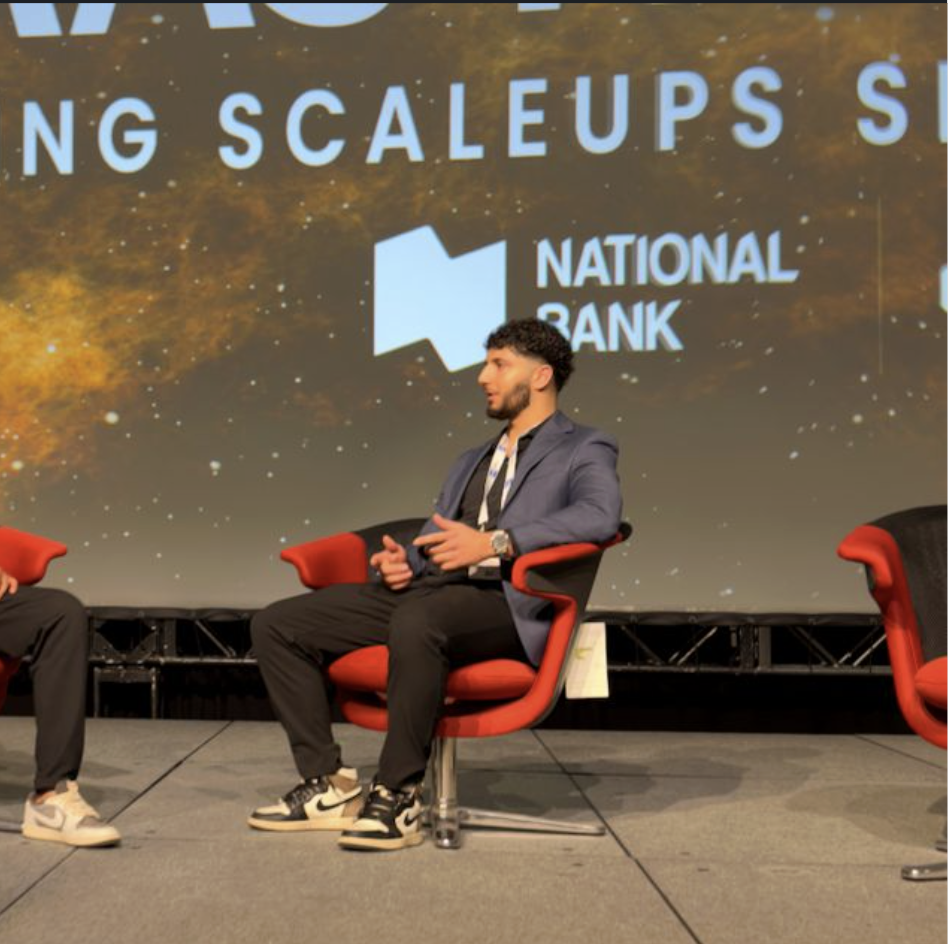
A founder checking pipeline results generated by automated SaaS customer acquisition rather than personal outreach.
Why Founder-Led SaaS Growth Breaks Down
Many founders describe the same rollercoaster: fifty demos one month, six the next, with no clear explanation for either. Consequently, the product gets blamed when the real issue is almost always distribution, not quality. A good product with inconsistent acquisition will always look like a bad product on paper.
Furthermore, when an ad does work, it often dies within weeks, leaving the founder scrambling for the next lucky creative. According to Wikipedia's overview of the software-as-a-service model, SaaS businesses rely heavily on recurring, predictable revenue to justify their valuations, which makes inconsistent acquisition especially damaging over time. Without a system, every slow month resets the business back to zero instead of building on the last one.
Above all, this is a people problem, not a market problem. One person cannot personally run outbound, manage ad accounts, write new creative, qualify leads, and close every demo while also building the product. Therefore, something has to give, and it is usually consistency.
The Core Components of an Automated SaaS Customer Acquisition Engine
A real acquisition engine is made of several specific parts working together, not one clever ad campaign. Below are the five components that separate a lucky month from a system that compounds.
Intent Data and Qualified Targeting
Specifically, intent data identifies companies actively researching a solution right now, rather than guessing based on job title or industry alone. As a result, spend goes toward buyers with real budget and urgency instead of browsers who were never going to purchase.
Creative Volume and Continuous Testing
In addition, one winning ad will eventually fatigue and stop performing, no matter how good it is. Therefore, a system needs a steady stream of new creative being tested, so performance never depends on a single asset surviving forever.
Automated Lead Qualification and Routing
Equally important, not every click or form fill deserves a founder's calendar slot. Automated scoring and routing filter out tire-kickers before they ever reach a sales conversation, so human time is spent only on buyers who are genuinely ready to talk.
Sales Enablement That Actually Converts
Meanwhile, qualified demos still need a strong sales process to turn into paying customers. Without it, a founder is simply buying a busier calendar instead of buying revenue, which defeats the purpose of automating the front end at all.
Lifecycle Automation and Onboarding
Finally, a customer who churns in month two never earns back the cost it took to acquire them. Consequently, automated onboarding sequences and lifecycle emails protect the return on every dollar the acquisition engine spends, which is often the piece a thin strategy skips entirely.
How to Build an Automated SaaS Customer Acquisition System
Building this kind of engine follows a fairly consistent sequence, regardless of a company's niche. The steps below outline the full process, from first audit to ongoing optimization.
- Audit founder dependency. Map every part of growth that only works because the founder personally runs it, from sales calls to ad approvals to creative sign-off.
- Install intent-based targeting. Replace broad demographic targeting with intent signals that surface companies actively in-market with the budget to buy right now.
- Build a creative testing cadence. Produce new ad variations on an ongoing schedule instead of relying on one ad to carry the account indefinitely.
- Automate lead qualification and routing. Score and route interest automatically so only genuinely qualified prospects land on a sales calendar.
- Add structured sales enablement. Bring a proven, repeatable sales process into the funnel so demos reliably convert into paying customers.
- Track revenue and CAC payback, not just leads. Measure success by closed revenue and cost per acquired customer, not click volume or lead count alone.

Continuous creative testing keeps an automated SaaS customer acquisition engine from stalling after one ad fatigues.
Automated Acquisition vs Traditional SaaS Marketing Agencies
Traditional agencies typically own one slice of the funnel, usually ads or leads, and hand responsibility for the rest back to the founder. Consequently, when revenue does not follow lead volume, the agency simply blames the sales process and moves on.
In contrast, an automated acquisition system is built end to end, from first impression through closed revenue, which keeps everyone focused on the only metric that matters. Founders who have been burned by a scattered agency relationship can compare approaches using this breakdown of what to look for in a SaaS customer acquisition agency, since not every partner is structured the same way.
Automated Acquisition vs Product-Led Growth and Inbound Content
Product-led growth and inbound content both work, but they work slowly and depend on a large existing audience or a free-tier product that sells itself. For a founder who needs qualified pipeline next quarter, not in eighteen months, waiting on organic compounding is not a strategy, it is a hope.
That said, automated SaaS customer acquisition is not opposed to inbound or product-led motion. Instead, it typically runs alongside them, generating predictable pipeline today while content and product virality compound in the background for later. Few resources frame this trade-off clearly, which leaves founders assuming it has to be one or the other.
What Predictable SaaS Pipeline Looks Like in Practice
When this kind of system runs correctly, the calendar fills with qualified demos that were never personally chased, and next month's pipeline is already engineered rather than hoped for. For example, Atlas scaled from 10,000 to over 120,000 dollars in monthly recurring revenue within 120 days once targeting and creative testing were systemized together.
Similarly, InstaPatient moved from two demos a week to more than 200 demos a month without changing the product itself, simply by fixing who was being put in front of it. In another case, Media Maxing grew to 1.2 million dollars in annual recurring revenue within 90 days while its founder ran a separate business at the same time, which is only possible when acquisition no longer depends on daily personal effort. Readers can review more detail on this approach in this complete guide to B2B SaaS customer acquisition.
Lowering Customer Acquisition Cost Through Automation
One of the most measurable benefits of a systemized engine is a falling cost per qualified demo over time. As targeting improves and underperforming creative gets cut, spend concentrates on what actually converts. The U.S. Small Business Administration's guidance on marketing and sales similarly notes that tracking results and adjusting spend based on performance is central to sustainable growth, a principle that applies directly to SaaS acquisition.
In particular, two numbers matter more than raw lead count: customer acquisition cost, often called CAC, and CAC payback period, meaning how many months of revenue it takes to recoup the cost of winning that customer. A falling CAC combined with a shortening payback period is the clearest sign the engine is improving, not just running.
For founders who want a deeper walkthrough of this specific challenge, this guide on lowering customer acquisition cost in SaaS covers the mechanics in more detail. Across a portfolio of SaaS accounts managing roughly 1.8 million dollars a month in combined ad spend, this kind of continuous optimization has helped 14 companies pass a million dollars in annual recurring revenue.
The Technology Stack Behind an Automated SaaS Customer Acquisition System
No single tool automates customer acquisition on its own. Instead, several categories of software work together, each covering one part of the funnel.
- Intent data platforms that surface which companies are actively researching a category right now.
- Ad platforms and creative pipelines that support rapid, high-volume testing rather than one static campaign.
- Lead scoring and CRM automation, built on a marketing automation foundation, meaning software that triggers actions based on buyer behavior without manual effort.
- Sales enablement tooling for scripting, objection handling, and call review.
- Analytics and attribution dashboards that connect spend directly to closed revenue instead of stopping at lead count.
As a result, the technology matters less than how tightly these pieces are connected. A disconnected stack produces disconnected data, and disconnected data produces exactly the guesswork this whole approach is meant to eliminate.

Structured sales support turns qualified demos from automated SaaS customer acquisition into closed revenue.
How AI Search Is Reshaping SaaS Customer Acquisition
Increasingly, buyers ask AI tools which software to use instead of searching traditionally. Therefore, being recommended inside those answers is becoming a genuine acquisition channel, not a future curiosity.
Specifically, SaaS companies that optimize their positioning, reviews, and content for AI recommendation engines now can capture demand before competitors even appear in the conversation. This matters most for early-stage and pre-revenue companies, since it can turn launch day into a head start rather than a cold start.
Common Mistakes That Sabotage Automated Acquisition
The most common mistake is chasing lead volume instead of lead quality, which fills the calendar with tire-kickers who never close. Another frequent error is relying on a single winning ad instead of continuous testing, which causes performance to collapse once that ad fatigues.
Equally damaging, some founders automate the front of the funnel but leave sales untouched, which simply moves the bottleneck instead of removing it. Finally, ignoring onboarding and lifecycle automation lets churn quietly erase the gains a well-built acquisition engine just produced.
Choosing the Right Partner for SaaS Customer Acquisition Automation
Above all, the right partner should take ownership of the full journey, not just a slice of it. SaaSLaunch, for instance, works specifically with B2B SaaS founders to install intent-based targeting, high-volume creative testing, and sales support as one connected system rather than separate services.
One client, Acrely, grew from 240,000 to 2.8 million dollars in annual recurring revenue while the founder moved from attending every sales call to attending none of them, which ultimately added more than 20 million dollars to the company's valuation. For founders who are not yet sure what their current bottleneck even is, this article on getting SaaS customers consistently is a useful starting point, as is this guide on removing acquisition from a founder's plate entirely. Founders can also explore the approach directly at saaslaunch.com.
Frequently Asked Questions About Automated SaaS Customer Acquisition
What is automated SaaS customer acquisition?
Automated SaaS customer acquisition is a system that identifies, targets, and converts qualified buyers into demos and customers without relying on a founder's daily manual effort. It combines intent data, consistent creative testing, and structured sales support into one repeatable pipeline.
How does automated SaaS customer acquisition differ from traditional marketing?
Traditional marketing often focuses on clicks and leads as isolated metrics, while automated acquisition tracks the full journey from first impression to closed revenue. It also removes the founder as the bottleneck by building sales and targeting directly into the system.
How long does it take to build an automated acquisition engine?
Most SaaS companies see the first stable results within 60 to 120 days, depending on starting ad spend, creative volume, and sales capacity. Some accounts have scaled monthly recurring revenue from 10,000 to over 120,000 dollars in as little as 120 days.
How much does automated SaaS customer acquisition cost?
Costs vary based on ad spend, creative production, and whether sales support is included, so there is no single fixed number. Because the goal is lowering cost per qualified demo over time, total cost typically drops as the system matures rather than staying fixed.
What are the biggest mistakes founders make when automating acquisition?
The most common mistake is chasing lead volume instead of lead quality, which fills the calendar with tire-kickers who never close. Another frequent error is relying on a single winning ad instead of continuous testing, which causes performance to collapse once that ad fatigues.
Can automated SaaS customer acquisition work for a pre-revenue startup?
Yes, pre-revenue SaaS companies can begin building toward automated acquisition early, including positioning themselves to be recommended inside AI answer engines before launch. This can turn launch day into a head start rather than a cold start.
What role does intent data play in this process?
Intent data identifies companies actively researching a solution right now, rather than guessing based on job title or industry alone. This allows targeting to focus on buyers with budget and urgency instead of browsers who are months away from purchasing.
Why do most SaaS founders struggle to scale beyond founder-led sales?
Founder-led growth is limited by one person's personal hours and energy, so the business can only grow as fast as that person can push it. Without a repeatable system, every slow month becomes a crisis because nothing is generating the next one automatically.
What metrics show that an acquisition engine is actually working?
A healthy engine produces a consistent weekly volume of qualified demos and a falling cost per acquired customer over time. Equally important, revenue growth should not depend on the founder personally selling on every call.
How is this different from hiring a typical marketing agency?
Typical agencies usually own only ads or only leads and hand off the rest, so no one is accountable for revenue. An automated acquisition partner owns the full journey from targeting through sales, which keeps the focus on closed revenue instead of vanity metrics.
Does automating customer acquisition reduce customer acquisition cost?
Yes, in most cases, because continuous creative testing and better-qualified targeting reduce wasted spend on buyers who were never going to convert. As the system learns which audiences and messages perform best, cost per qualified demo tends to trend downward.
What is the first step to automating SaaS customer acquisition?
The first step is auditing where current growth depends on the founder personally, from sales calls to ad decisions, to identify what can be systemized first. From there, intent-based targeting and a creative testing cadence usually follow.
How are AI search tools changing SaaS customer acquisition?
Buyers increasingly ask AI tools which software to use instead of searching traditionally, so being recommended inside those answers is becoming a real acquisition channel. SaaS companies that optimize for AI recommendations early can capture demand before competitors even appear.
What tools are typically used to automate SaaS customer acquisition?
Most engines combine an intent data platform, an ad and creative testing pipeline, CRM-based lead scoring built on marketing automation, sales enablement tooling, and an attribution dashboard that ties spend directly to closed revenue.
Does automated SaaS customer acquisition work for self-serve or product-led products?
Yes, it typically runs alongside product-led growth rather than replacing it, generating predictable demo and trial volume today while the product's own virality compounds separately over time.
Key Takeaways
Ultimately, automated SaaS customer acquisition exists to solve one specific problem: growth that depends entirely on one exhausted founder. By combining intent-based targeting, continuous creative testing, automated qualification, structured sales support, and lifecycle automation, a SaaS company can replace guesswork with a system that compounds month after month instead of resetting every time the founder's attention shifts elsewhere.
As shown by companies like Atlas, InstaPatient, Media Maxing, and Acrely, which have each scaled past seven figures using this approach, the result is not just more leads. It is a business that can finally run, and eventually be valued, independently of its founder. Founders ready to explore what automated SaaS customer acquisition looks like for their own company can review practical next steps for removing acquisition from their plate or visit saaslaunch.com directly to see how the first 30 days of building an automated acquisition engine typically looks.