B2B SaaS growth strategies are the systems and processes that turn unpredictable revenue into a repeatable, founder-independent acquisition engine. Instead of relying on a founder's personal hustle, effective strategies combine offer clarity, targeted paid acquisition, and structured sales follow-up so pipeline shows up every single week. This article breaks down exactly what those strategies look like, why most founders never install them properly, and how to build one that compounds over time.
In short: The strongest B2B SaaS growth strategies pair a sharply refined offer with intent-based paid advertising and a real sales process, so revenue grows without depending on the founder's calendar. Companies that treat growth as a system, not a scramble, scale faster and hold their valuation better when it's time to sell.
What Are B2B SaaS Growth Strategies?
B2B SaaS growth strategies are the deliberate, repeatable processes a software company uses to acquire and retain customers without depending entirely on the founder's personal effort. In practice, this means installing systems for lead generation, qualification, and sales conversion that keep running whether or not the founder is personally involved that week.
Consequently, a real strategy looks less like a single tactic and more like a connected chain: the right audience is reached with the right message, that interest is qualified before it hits a calendar, and a structured sales process closes the deal. Without every link in that chain, even a brilliant product will struggle to grow past the founder's own bandwidth.
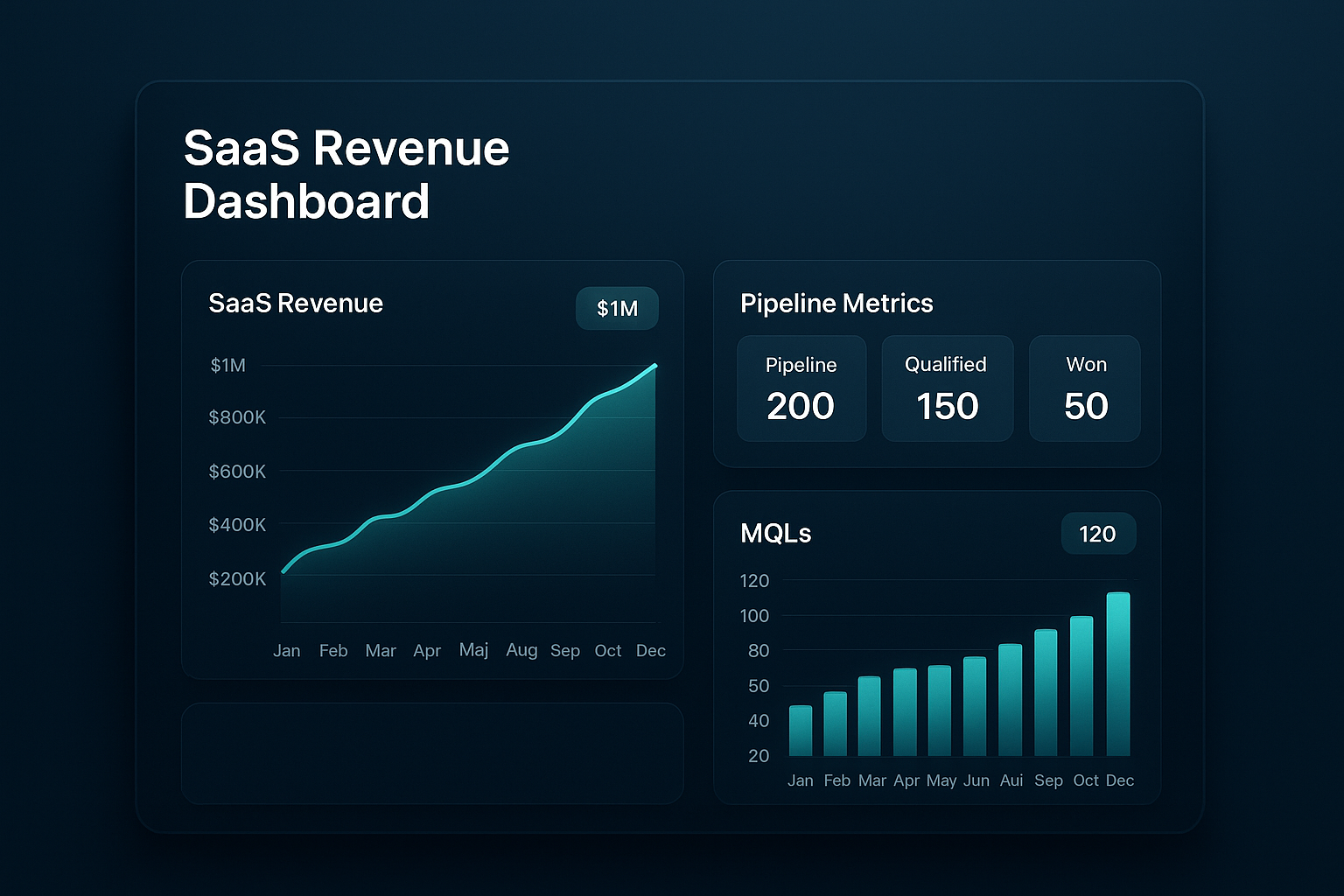
Consistent B2B SaaS growth strategies replace unpredictable spikes with a steady, trackable pipeline.
Why Predictable Customer Acquisition Beats Random Growth Spikes
Many SaaS founders describe the same rollercoaster: fifty demos one month, six the next, with no clear explanation for either. As a result, the business feels less like a company and more like a bet placed every thirty days. In contrast, predictable customer acquisition means next month's pipeline is already engineered before the calendar flips over.
According to McKinsey research, SaaS companies growing at least 20% annually have a 92% chance of surviving five years later, compared to just 22% for those growing under 10%. Therefore, consistency isn't just more comfortable for founders, it's directly tied to long-term survival and valuation.
Core B2B SaaS Growth Strategies That Work in 2025
Several tactics consistently separate scaling SaaS companies from stalled ones. Specifically, three areas tend to matter more than any others: offer positioning, targeted paid acquisition, and sales systemization.
Offer Refinement Before Ad Spend
Above all, no amount of ad spend fixes a weak offer. Before scaling anything, it helps to sharpen exactly who the product serves and what specific outcome it delivers. Founders exploring this step often start with a structured offer refinement process to identify what's actually holding conversion back.
Intent-Based Paid Acquisition
Meanwhile, reaching companies that are actively in-market, rather than casting a wide net, dramatically improves demo quality. Platforms such as Meta Ads paired with intent data let founders stop paying to talk to browsers and start talking to buyers with budget ready now.
Sales Process Systemization
Finally, even perfectly qualified demos go nowhere without a structured follow-up process. Building repeatable qualification steps ensures booked calls convert into signed customers instead of quietly disappearing from the pipeline.
How to Build a Systemized SaaS Growth Engine
Building a true growth engine follows a specific sequence. Below is the process, step by step:
- Refine the offer. Clarify exactly who the product serves, what transformation it delivers, and why it beats alternatives, since scaling a weak offer only multiplies wasted spend.
- Define the ideal customer profile. Use intent data and past customer patterns to identify companies actively in-market with budget available, rather than guessing at broad demographics.
- Build multi-channel paid acquisition. Launch creative at meaningful volume across channels so campaigns survive fatigue instead of collapsing after one winning ad burns out.
- Install a systemized sales process. Bring structured qualification and follow-up into the pipeline so booked demos convert into signed customers instead of stalling out.
- Measure, iterate, and scale. Track CAC, LTV, and pipeline velocity weekly, then reinvest budget into what's proven while cutting underperforming channels.
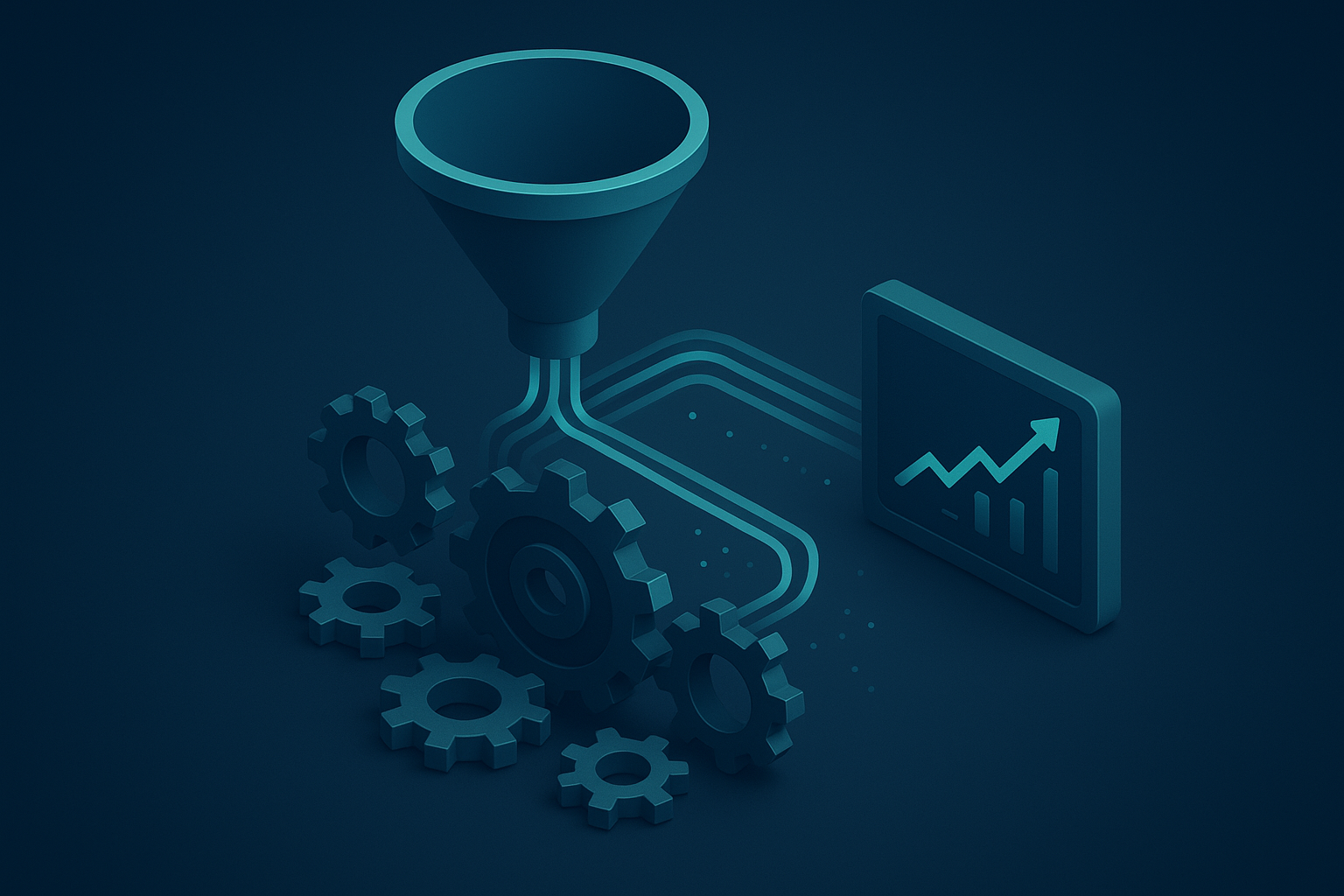
Each stage of the funnel connects offer, acquisition, and sales into one repeatable system.
Common Mistakes That Sabotage SaaS Growth Strategy
Even well-funded SaaS teams make avoidable errors. For instance, targeting overly broad audiences dilutes ad spend across people who were never going to buy. Similarly, relying on a single creative until it fatigues leaves accounts vulnerable to sudden performance cliffs.
In addition, many founders neglect the sales side entirely, assuming more leads automatically means more revenue. However, without qualification and structured follow-up, a full calendar can actually distract from the company rather than grow it. According to the U.S. Small Business Administration's guidance on customer acquisition planning, businesses that track acquisition cost against lifetime value consistently outperform those that measure activity alone.
Choosing the Right SaaS Growth Partner
Not every agency owns the full journey from stranger to customer. Therefore, it helps to ask a potential partner how they handle sales handoff, not just lead volume. Reviewing documented case studies reveals whether a partner can actually turn spend into revenue, not just impressions.
For founders who haven't launched yet, some partners also offer services built specifically for that stage. Pre-revenue teams can explore early-stage growth planning, while founders still building their product may benefit from pre-launch positioning, including visibility inside AI answer engines before competitors even notice the shift in buyer behavior. As a resource, SaaSLaunch documents this approach across dozens of B2B SaaS categories.

Reviewing performance data weekly keeps a growth strategy accountable to revenue, not just activity.
Frequently Asked Questions About B2B SaaS Growth Strategies
What are the most effective B2B SaaS growth strategies right now?
The most effective B2B SaaS growth strategies combine offer refinement, intent-based paid acquisition, and a systemized sales process so pipeline shows up predictably every week. Founders who layer these together tend to outperform those relying on a single channel or one-off campaigns.
How long does it take to see results from a new SaaS growth strategy?
Most SaaS companies see early pipeline signals within 30 to 60 days, with compounding results by month three or four. However, timelines vary based on offer clarity, market size, and existing historical data.
How much should a SaaS company spend on customer acquisition?
Spend should be tied to customer lifetime value rather than an arbitrary percentage of revenue. As a general guide, a healthy LTV to CAC ratio is 3:1 or higher before aggressively scaling ad spend.
What is the difference between growth hacking and a systemized growth strategy?
Growth hacking chases quick, often unrepeatable wins, while a systemized strategy builds repeatable processes that compound over time. Systemized growth is designed to survive without constant founder intervention.
Why do SaaS founders struggle to scale past six figures in MRR?
Most founders plateau because growth still depends on their personal time, whether that's selling, running ads, or closing deals themselves. Removing the founder as the bottleneck is usually the single biggest unlock past this stage.
What role does paid advertising play in B2B SaaS growth?
Paid advertising, particularly on platforms like Meta and LinkedIn, provides the volume and targeting precision needed to reach in-market buyers consistently. It works best when paired with strong offer positioning and a sales process built to convert the leads it generates.
How do you know if your SaaS offer needs refinement before scaling ads?
If demos are booking but few convert to paying customers, the offer itself often needs sharpening before more ad spend will help. Refining positioning, pricing, or the promise made in ad creative usually resolves this faster than adding budget.
What is a good customer acquisition cost to LTV ratio for SaaS?
A ratio of at least 3:1 between lifetime value and customer acquisition cost is generally considered healthy. Ratios closer to 5:1 indicate strong efficiency and room to reinvest in growth.
Can pre-revenue SaaS startups use these growth strategies?
Yes, pre-revenue SaaS startups can and should begin building acquisition systems early, often starting with offer validation before paid scaling. Some pre-launch founders also invest in visibility inside AI answer engines so they're discoverable from day one.
What common mistakes sabotage SaaS growth campaigns?
The most common mistakes include targeting broad audiences instead of in-market buyers, relying on a single ad creative until it fatigues, and neglecting the sales process that converts demos into revenue. Each of these quietly caps growth even when traffic looks healthy.
How is Answer Engine Optimization different from traditional SEO for SaaS?
Traditional SEO focuses on ranking in search engine results pages, while Answer Engine Optimization focuses on being recommended directly inside AI tools like ChatGPT. For SaaS founders, this means positioning their product to be the answer AI gives buyers, not just a link they click.
How do I choose the right growth partner for my SaaS company?
Look for a partner who owns outcomes like revenue and pipeline rather than vanity metrics like clicks or impressions. Reviewing documented case studies and asking how they handle sales handoff will reveal whether they can actually deliver results.
What metrics matter most when measuring SaaS growth?
Monthly recurring revenue, qualified pipeline volume, and CAC-to-LTV ratio matter more than surface metrics like impressions or click-through rate. Tracking these consistently reveals whether a growth strategy is actually working, not just generating activity. For a deeper breakdown of core SaaS terminology, Wikipedia's overview of software as a service is a useful starting reference.
Final Thoughts
In summary, effective B2B SaaS growth strategies aren't about chasing the next viral tactic. Instead, they're built by refining the offer, reaching genuinely in-market buyers, and installing a sales process that converts consistently. Once those pieces connect, growth stops depending on any one person's calendar and starts compounding on its own. Whether a founder is pre-revenue, scaling past seven figures, or preparing for an exit, the same principle holds: predictable systems beat lucky months every time.