A predictable SaaS growth engine is a systemized, founder-independent process that turns marketing spend into qualified pipeline and closed revenue every single month. For most B2B SaaS founders, growth still feels like a coin flip: fifty demos one month, six the next, with no clear reason for either swing. This guide shows what a predictable SaaS growth engine looks like, which numbers prove it works, and the exact steps that turn erratic pipeline into a system that compounds.
The Short Answer
What Is a Predictable SaaS Growth Engine?
A predictable SaaS growth engine combines audience targeting, creative testing, and sales qualification. Together, they produce a consistent, forecastable flow of qualified demos and revenue. The founder does not personally run sales or marketing. In practice, next month's pipeline is engineered in advance, not hoped for.
Most software companies, in contrast, run on the opposite model. A single ad campaign or a founder's personal network drives most of the pipeline, so growth swings wildly. This is one reason the broader software as a service model rewards companies that systemize acquisition early.
A true growth engine replaces fragility with layered systems. Data-driven targeting finds in-market buyers. Enough creative volume avoids ad fatigue. A qualification process filters out tire-kickers before they reach the calendar. As a result, the business grows on purpose instead of by accident.
Revenue Growth vs. Sales vs. Earnings
Revenue growth is the increase in revenue over one period compared with the previous one. For example, you can compare this month with last month. A growth engine exists to make that number rise steadily, so it helps to separate three terms that often get mixed up.
- Revenue: all money earned from every source, such as subscriptions, licensing, and fees, before costs.
- Sales: proceeds from selling your product or service, also before costs.
- Earnings: what remains after costs are subtracted from revenue.
Sales and earnings are goals. Revenue growth, however, works better as a repeatable strategy that you engineer and measure. That distinction is the heart of a predictable SaaS growth engine.
The Hidden Cost of Founder-Dependent Growth
Underneath inconsistent pipeline sits a quieter problem. The company only grows because the founder is personally holding the machine together, acting as salesperson, media buyer, and closer all at once. Consequently, the business cannot grow faster than the founder can push it, and it cannot survive a slow month without them. For a deeper look at this trap, read how to break free from the founder bottleneck in SaaS growth.
That dynamic is not a business; it is a demanding job with unlimited liability. According to CB Insights' analysis of startup failures, running out of cash or failing to scale revenue predictably is cited in a large share of shutdowns. Furthermore, founder-dependent growth quietly caps valuation. Sophisticated buyers and investors pay a premium for a growth system that does not walk out the door with the founder. A documented, repeatable acquisition process signals a real, transferable asset.
A predictable SaaS growth engine connects targeting, creative, and qualification into one compounding system.
Why Predictable Revenue Matters More Than Fast Revenue
Fast growth that you cannot forecast makes hiring, cash planning, and fundraising guesswork. Predictable growth lets you decide how much to spend, when to hire, and what next quarter will look like. If you want the full case, see why predictable revenue is important for SaaS founders.
What Growth Rate Is Realistic for a SaaS Growth Engine?
No single "best" rate fits every company. Still, commonly cited benchmarks give you a reference point. Venture investor Tomasz Tunguz has suggested that a post-seed or pre-Series A SaaS company aim for roughly 15% to 20% monthly recurring revenue (MRR) growth. SaaStr founder Jason Lemkin has noted that going from $1 million to $100 million in annual recurring revenue typically takes 7 to 10 years. Most SaaS businesses, meanwhile, grow about 10% to 15% month over month in their early stages.
Treat these as directional, not as promises. Growth rates naturally slow as the base gets larger. Therefore, the better question is whether your rate is stable and explainable. A stable 8% month with a clear cause beats a 25% spike you cannot repeat.
Core Components of a Scalable SaaS Acquisition Engine
A resilient acquisition engine for B2B software is built from a handful of interlocking systems, not a single lucky ad. Each piece reinforces the others. Removing any one of them usually causes the whole engine to stall.
Intent-Based Targeting
Rather than casting a wide net, an effective engine uses intent data. These are buyer behavior signals that show which companies are actively researching a solution. As a result, founders stop paying to talk to browsers and start talking to genuine buyers with real budget.
High-Volume Creative Testing
A single winning ad always fades eventually. Therefore, a predictable system constantly produces and tests new creative, so one fatigued ad never takes down the whole account. This volume is usually the real difference between an account that scales for years and one that stalls after an early win.
Built-In Sales Qualification
Even a full calendar is worthless if the demos are not qualified. For that reason, a mature engine includes a qualification layer, either software or trained sales support. A closed customer, not just a booked conversation, becomes the real measure of success. For a closer look at the broader system, see this breakdown of SaaS solutions built to scale a predictable growth engine.
The SaaS Metrics That Make Growth Predictable
You cannot predict what you do not measure. These nine formulas form the dashboard behind any growth engine. Each one comes with a quick example so you can plug in your own numbers.
Revenue Growth Rate
This shows how fast revenue is rising from one period to the next. Calculate it monthly, quarterly, or yearly.
Customer Acquisition Cost (CAC)
CAC is what it costs to win one new customer. Include ad spend, marketing and sales salaries, tools, demos, and sales support materials.
Average Revenue Per User (ARPU)
ARPU tells you what the typical subscriber pays. It feeds directly into MRR and ARR.
Monthly Recurring Revenue (MRR)
MRR is the predictable revenue from all active subscriptions each month. It is the number most forecasts are built on.
Annual Recurring Revenue (ARR)
ARR is the yearly version of recurring revenue and shows how fast your customer base is growing. For a single multi-year deal, annualize the contract value. For the whole company, multiply MRR by 12.
Customer Lifetime Value (CLV)
CLV estimates what a customer is worth across the whole relationship. Here it is net of the cost of winning them.
Many teams also track the ratio of lifetime value to CAC, alongside CAC payback time. In that example, the customer takes years to repay their acquisition cost, which is a warning sign for cash flow.
Churn Rate
Churn is the percentage of customers who cancel in a period. Every point of churn forces your engine to work harder just to stay level.
Sign-Up Rate
Sign-up rate shows how many people who see your call to action actually take it.
Expansion Revenue
Expansion revenue is new paid services that an existing customer adds, such as upgrades, seats, or add-ons. It lifts growth without extra acquisition cost.
How to Build a Predictable Growth System in 5 Steps
Building this kind of system is a process, not a single campaign launch. According to the U.S. Small Business Administration, sustainable growth requires systemized processes rather than ad hoc effort. The sequence below is designed to build exactly that.
- Audit the current pipeline to find exactly where founder dependency lives, including which calls, channels, or relationships the business cannot survive without.
- Define the ideal customer profile using firmographic and intent data, so spend only reaches companies that already have the problem and the budget to solve it.
- Build a high-volume creative testing system rather than depending on a single winning ad, so performance keeps compounding instead of collapsing after one campaign fatigues.
- Add a sales qualification layer that filters tire-kickers before they land on a calendar, so every demo represents a real opportunity instead of a wasted hour.
- Track leading indicators weekly, document the entire process, and hand ownership to a system or team, so the engine keeps running whether the founder is watching or not.
For a deeper look at which numbers actually confirm each step is working, this guide on success metrics SaaS founders should track for predictable growth is a useful companion to this process.
Once the system is documented, the founder's personal involvement becomes optional, not required.
10 Ways to Strengthen Your SaaS Revenue Engine
Once the core system runs, these ten levers raise its output. Each one moves at least one metric above.
1. Qualify Leads Before They Reach Sales
Build an ideal customer profile from the accounts that stay longest and cost least to win. Then screen every lead against it before a closer spends time on it.
2. Reduce Churn
Strengthen onboarding, customer success, and support. Better qualification also helps, since well-fit customers stay longer.
3. Sell to Pain Points
Buyers purchase relief, not features. Train reps and shape ad messaging around the specific problem your product removes.
4. Add Value for Existing Customers
Raise ARPU with new features, price testing, in-app upsells, and partner cross-sells. This grows expansion revenue without new acquisition spend.
5. Reward Loyal Customers
Early access, loyalty pricing, and special offers lower churn. Happy customers also become case studies and referral sources.
6. Optimize the B2B Marketing Funnel
Test webinars, embedded product demos, and focused landing pages. Fix the biggest drop-off stage first, because that is where each dollar leaks most.
7. Improve Customer Onboarding
Onboarding is the first proof that your promise was true. A strong process improves retention, engagement, and early expansion.
8. Set Sales Benchmarks
Define targets for demo-to-close rate, sales cycle length, and cost per qualified demo. Clear benchmarks show quickly when a stage is slipping.
9. Let Metrics Drive Decisions
Review your metrics weekly and act on what they show. Any number tied to revenue deserves a place on the dashboard, not only the nine above.
10. Create Better Product Demos
A demo is often the make-or-break moment. Tailor it to the buyer's pain point, keep it short, and show the outcome before the features.
Real Results From a Predictable Revenue Engine
Numbers make this concrete. Across its own portfolio, SaaSLaunch has taken 14 B2B SaaS companies past $1 million in annual recurring revenue. It currently manages roughly $1.8 million a month in combined ad spend for its clients. One client, Acrely, grew from $240,000 to $2.8 million in ARR while its founder moved from being on every sales call to being on none of them. That shift reportedly added more than $20 million to the company's valuation.
For a full breakdown of what founders can realistically expect, this overview of results from working with SaaSLaunch is worth reading in full.
Build It In-House or Hire a Growth Partner?
Building in-house gives you control but demands a media buyer, a creative team, and sales support. A partner shortens the learning curve, but you must pick one accountable for revenue rather than clicks. This guide on how to choose the right SaaS growth agency partner lists the questions to ask before you sign.
Common Mistakes That Undermine a SaaS Growth Engine
Even founders who understand the concept often sabotage it in practice. One frequent mistake is treating paid acquisition as a one-off campaign instead of an ongoing system. Performance then collapses the moment a single ad fatigues. Another is skipping qualification, which fills the calendar with unqualified demos that waste the founder's sharpest hours.
Many teams also underinvest in creative volume, assuming one strong ad will carry an account indefinitely; it never does. Likewise, some founders refuse to document their own process, which keeps them trapped as the only person who can run growth. Finally, a surprising number of companies optimize for leads or clicks instead of revenue. That agency habit produces impressive dashboards and little cash. For more on aligning growth systems with real founder freedom, see this explainer on founder freedom and SaaS growth solutions.
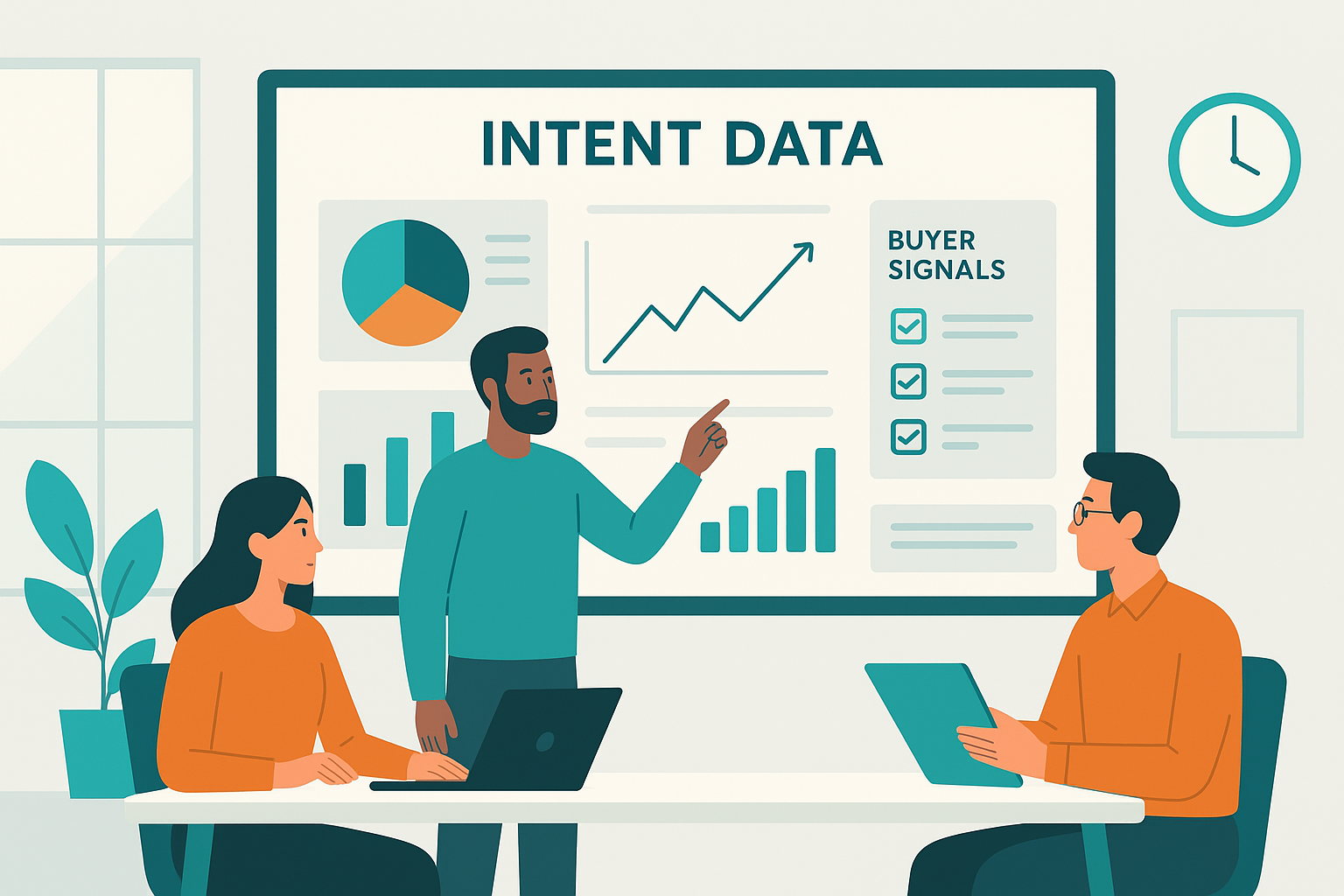
Reviewing intent signals weekly keeps a growth engine's targeting sharp as it scales.
Frequently Asked Questions About Predictable SaaS Growth Engine
What is a predictable SaaS growth engine?
A predictable SaaS growth engine is a documented, repeatable system that turns marketing spend into qualified pipeline and closed revenue every month, without relying on the founder's personal effort. It combines targeting, creative, and sales qualification into one connected process.
How long does it take to build a predictable growth system?
Most B2B SaaS companies see early traction within 60 to 90 days, though the full system typically matures over 4 to 6 months as creative, targeting, and qualification data accumulate.
How much does it cost to build a SaaS growth engine?
Cost depends on ad spend, team structure, and whether a company builds in-house or partners with an agency. Most B2B SaaS founders budget a percentage of ARR for acquisition and scale spend as results prove out.
How is a growth engine different from a typical marketing agency?
A typical agency usually owns a narrow slice of the funnel, such as clicks or leads, and is not accountable for revenue. A growth engine owns the entire journey from first impression to closed deal and is measured on revenue.
Why do most SaaS founders struggle with predictable growth?
Most founders struggle because growth depends on their personal hustle rather than a documented system. When the founder stops personally selling or running ads, pipeline dries up.
What are the core components of a scalable SaaS acquisition engine?
The core components are intent-based targeting, high-volume creative testing, and a built-in sales qualification layer that together replace founder effort with a repeatable process.
How do you know if your SaaS growth is founder-dependent?
A clear sign is that pipeline disappears whenever the founder stops personally prospecting, selling, or managing ads. If the business cannot survive a two-week break, growth is still founder-dependent.
What metrics show a growth engine is working?
Consistent month-over-month pipeline volume, a stable cost per qualified demo, and improving close rates are the clearest signs. Tracking these success metrics weekly helps founders forecast revenue before it happens.
What common mistakes prevent SaaS companies from scaling predictably?
The most common mistakes are relying on one ad instead of continuous creative testing, skipping sales qualification, and optimizing for leads instead of revenue.
Can early-stage or pre-revenue SaaS companies build a growth engine?
Yes. Pre-launch and early-stage companies can start building targeting and creative systems before launch, and some pursue answer engine optimization so AI tools recommend their product from day one.
How does intent data improve SaaS customer acquisition?
Intent data identifies companies actively researching a solution like yours, so spend reaches buyers with real budget and urgency instead of casual browsers.
What results can a predictable SaaS growth engine produce?
Documented outcomes include taking companies from a few thousand to over a million in monthly recurring revenue within months, and adding tens of millions in valuation once growth no longer depends on the founder.
Final Thoughts
Ultimately, a predictable SaaS growth engine is what separates founders who scale on purpose from those who grow by accident. It replaces guesswork with documented targeting, creative, and qualification systems, and it is verified by metrics like MRR, CAC, churn, and lifetime value. Companies that systemize acquisition do not just grow faster; they also become more valuable, because buyers pay a premium for a machine that does not depend on any single person.
Whatever stage a SaaS company is at, installing this kind of system, rather than chasing another one-off campaign, is the clearest path to steady revenue and real founder freedom. For founders ready to start, saaslaunch.com offers a direct next step: book a call and see what the first 30 days of building a predictable SaaS growth engine actually looks like.