Founder Bottleneck SaaS Growth: How to Break Free Fast
Founder bottleneck SaaS growth is what happens when a software company's entire sales and marketing engine depends on one person showing up every single day, and it is quietly stalling more promising startups than bad products ever will. The product might be excellent, the market might be wide open, and the founder might still be the single point of failure holding the whole thing together. As a result, growth becomes a rollercoaster instead of a system, and the founder becomes the ceiling their own company can never grow past.
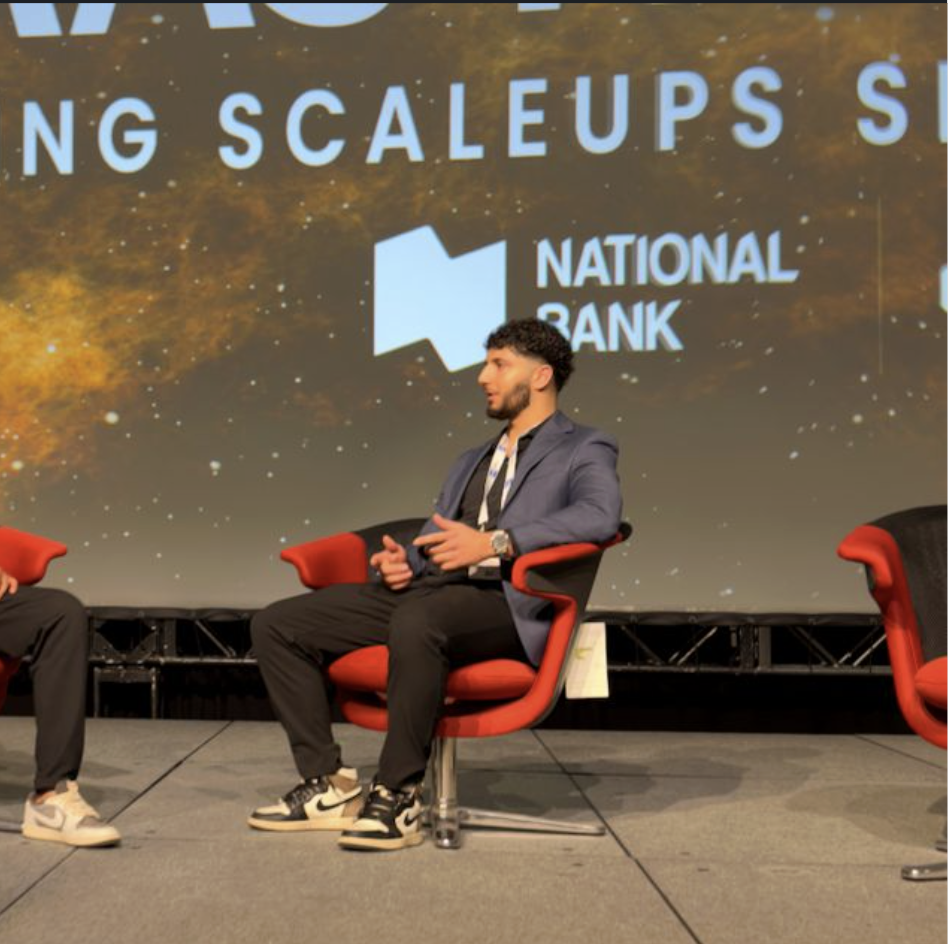
A founder stretched across sales, marketing, and operations is the clearest sign of founder bottleneck SaaS growth.
What Is Founder Bottleneck SaaS Growth?
Founder bottleneck SaaS growth is a pattern where a company's customer acquisition results cannot exceed what the founder personally generates through their own time and relationships. In other words, revenue growth is capped not by market demand, but by one person's calendar. Specifically, this shows up as inconsistent demo volume, a sales pipeline that dries up the moment the founder gets busy with something else, and a team that cannot answer basic growth questions without checking with the founder first.
According to Wikipedia's overview of the software as a service model, SaaS businesses are built on recurring revenue that compounds over time, which means a growth process that cannot run consistently undermines the entire economic logic of the business. Therefore, a founder bottleneck is not a minor inconvenience. It is a structural flaw that limits how far the company can actually scale.
Signs Your SaaS Is Stuck in a Founder-Dependent Growth Trap
Most founders living inside this trap do not recognize it as a system problem. Instead, they experience it as personal exhaustion, a packed calendar, and the nagging feeling that the business cannot survive without them. However, the pattern is usually consistent across companies.
- Fifty demos one month, six the next, with no clear explanation for either.
- A winning ad that performs brilliantly for two weeks, then quietly dies.
- A pipeline full of tire-kickers who were never going to buy in the first place.
- A calendar so packed with sales calls that there is no time to run the actual company.
- Revenue that drops sharply the moment the founder takes a vacation.
In contrast, a company free of this trap keeps generating qualified pipeline whether the founder is actively selling or not. If that description does not match your business yet, the remaining sections outline exactly how to close that gap.
Why Founder-Led Growth Breaks Down at Scale
A single person has a fixed number of hours in a week, and founder-led growth tries to stretch those hours across marketing strategy, ad creative, outbound outreach, demo calls, and closing. For a while, that works. Eventually, though, demand outpaces what one person can personally handle, and something has to give.
Consequently, growth stalls at exactly the moment it should be accelerating. Worse, the U.S. Small Business Administration's guidance on growing a business notes that scaling successfully requires systems and delegation, not simply working harder. For sophisticated buyers and investors, this dependency also becomes a red flag, since a growth engine that disappears when the founder leaves is treated as a serious risk rather than an asset.
As a result, the same qualities that made a founder successful early on, namely hustle and personal involvement in everything, become the exact thing standing between the company and its next stage of growth.
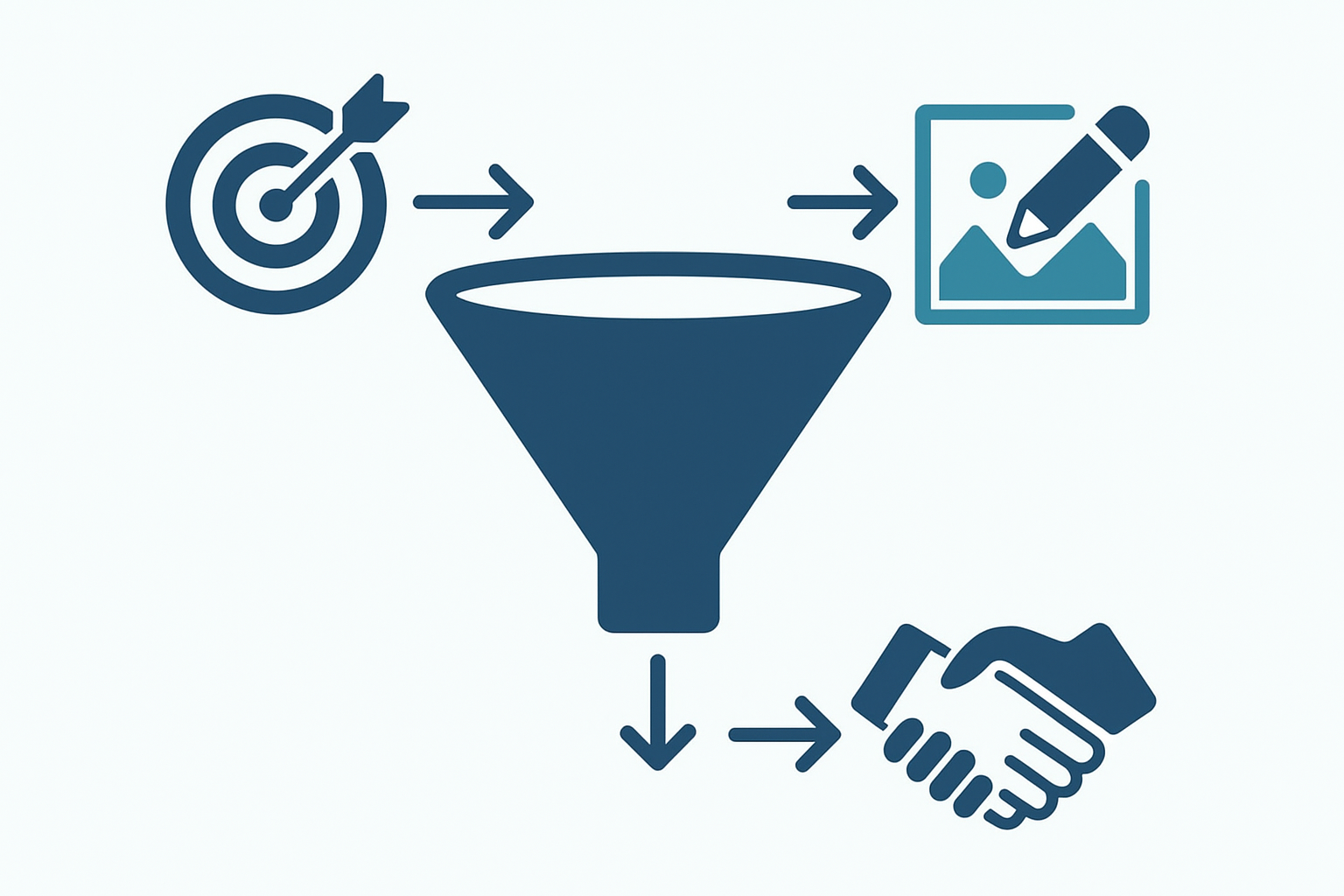
Replacing founder bottleneck SaaS growth with a documented system creates a pipeline that runs on its own.
How to Escape the Founder Bottleneck and Build a Predictable Growth Engine
Fixing this problem is not about working harder or hiring a single salesperson and hoping for the best. Instead, it requires rebuilding the acquisition process into a system that functions whether or not the founder is personally involved. The following steps outline that process.
- Diagnose where the bottleneck actually lives. Map every stage of your current pipeline, from first touch to closed deal, and mark the exact points where nothing moves forward without the founder personally stepping in.
- Replace guesswork targeting with intent data. Use intent signals to identify companies that are already actively researching a solution like yours and have budget available, instead of broadly targeting anyone who might fit a demographic profile.
- Scale creative production beyond one winning ad. Build a consistent pipeline of new creative variations every week so that when one ad fatigues, several others are already in rotation, preventing the feast-or-famine cycle founders typically experience.
- Install sales support that does not require the founder. Bring in trained sales support that can run discovery calls and close deals using a documented process, so demos convert into revenue without the founder sitting on every single call.
- Review results weekly and systemize the handoffs. Track pipeline, conversion, and revenue weekly, then document the process so every handoff between marketing and sales happens the same way whether or not the founder is watching.
Notably, this is the same five-part structure outlined in a founder's playbook for building scalable SaaS growth systems, which breaks each step down in more operational detail.
What Changes When You Remove the Founder Bottleneck From SaaS Growth
Once the system is in place, the shift is noticeable almost immediately. The founder's calendar fills with qualified demos they did not have to chase, and next month's pipeline is already engineered rather than hoped for. Furthermore, the hours that used to disappear into ad dashboards and sales calls go back into product development and leadership, which is the work only the founder can actually do.
For a deeper look at what this transition feels like week to week, this guide to SaaS growth without founder burnout walks through the practical day-to-day changes founders report.
Ultimately, the business stops being a job the founder can never leave and starts becoming a genuine asset, one that can scale aggressively, run lean and profitable, or sell at a premium, entirely on the founder's own terms.
Real Results From Breaking the Founder Growth Trap
Numbers tell this story better than theory does. SaaSLaunch's portfolio data shows that Acrely grew from $240,000 to $2.8 million in ARR while the founder moved off every single sales call, ultimately adding more than $20 million to the company's valuation because growth no longer depended on him personally. Similarly, Atlas scaled from $10,000 to over $120,000 in monthly recurring revenue in just 120 days, and InstaPatient went from two demos a week to more than 200 demos a month without changing the product at all, simply by fixing who was being put in front of it.
Meanwhile, Media Maxing hit $1.2 million in ARR within 90 days while its founder ran an entirely separate company at the same time, which is only possible when the acquisition engine genuinely runs independently. Across the full portfolio, this approach has pushed 14 SaaS companies past $1 million in ARR while managing $1.8 million a month in ad spend, a scale of pattern recognition across the B2B SaaS funnel that is difficult to replicate elsewhere.

When founder bottleneck SaaS growth is resolved, revenue keeps climbing even when the founder steps away.
Choosing a Growth Partner to Solve Founder Bottleneck SaaS Growth
Typical agencies own only a sliver of the customer journey and optimize for easy metrics like clicks and leads. When revenue does not follow, they often point to the founder's sales process rather than their own targeting or creative. In contrast, a partner worth hiring should own the entire path from a stranger's first impression to closed revenue, and should be held accountable to money in the bank rather than vanity metrics.
For example, SaaSLaunch works specifically with B2B SaaS founders who want predictable, systemized customer acquisition instead of founder-dependent guesswork, using intent data, high-volume creative, and sales support that converts demos into revenue. For founders who have not launched yet, SaaSLaunch also offers Answer Engine Optimization, positioning a new product to be recommended inside AI tools from day one, turning launch day into a head start rather than a cold start.
To understand exactly how this works in practice, this breakdown of how SaaSLaunch helps founders scale without founder bottlenecks walks through the end-to-end process, and this resource on founder-independent SaaS scaling covers how to structure the engine itself.
Tracking the Right Metrics After the Bottleneck Is Gone
Removing the founder from daily growth operations only works if the right numbers are being tracked afterward. Otherwise, it is impossible to know whether the system is actually improving or quietly sliding backward. In particular, founders should watch pipeline volume, cost per qualified demo, and sales cycle length on a weekly basis, not just monthly revenue totals.
For a complete list of the metrics that matter most during this transition, this guide on success metrics for predictable SaaS growth covers exactly what to measure and why. Research from McKinsey's growth marketing and sales insights similarly emphasizes that companies with disciplined, data-driven growth processes consistently outperform those relying on ad hoc effort.
Frequently Asked Questions
What is founder bottleneck SaaS growth?
Founder bottleneck SaaS growth describes a situation where a software company's sales and marketing results depend entirely on the founder's personal time and effort, rather than on a repeatable system. When the founder steps back, pipeline and revenue slow down or stop.
How do you know if your SaaS has a founder bottleneck?
Common signs include demo volume swinging wildly month to month, the founder running most or all sales calls, and revenue dropping sharply whenever the founder takes time off. If growth cannot survive a week without the founder, a bottleneck is present.
Why does founder-dependent growth stop working as a SaaS scales?
A single person has a hard ceiling on the hours and attention they can give to sales and marketing each week. As demand grows, that ceiling becomes the limiting factor on revenue, regardless of how strong the product is.
What is the difference between founder-led growth and a systemized growth engine?
Founder-led growth relies on the founder's personal network, hustle, and sales skill, which is hard to replicate or scale. A systemized growth engine uses repeatable targeting, creative, and sales processes that generate pipeline whether or not the founder is personally involved.
How long does it take to remove a founder bottleneck from SaaS growth?
Most SaaS companies see measurable change within 60 to 120 days once intent-based targeting, creative systems, and independent sales support are in place. Full founder independence typically takes a few months of consistent execution.
How much does it cost to fix founder bottleneck SaaS growth?
Costs vary based on ad spend, sales support, and company stage, but the real comparison is opportunity cost. A founder's time spent on sales calls instead of product and leadership is typically far more expensive than the system that replaces it.
What are the most common mistakes founders make when trying to delegate growth?
Founders often hire a single salesperson or run one ad campaign and expect the bottleneck to disappear overnight. Without a full system covering targeting, creative volume, and sales process, the same unpredictable pattern simply repeats itself.
What best practices help SaaS founders build predictable pipeline?
Best practices include using intent data to reach in-market buyers, producing creative at high volume to avoid fatigue, and bringing in sales support that converts demos without founder involvement. Consistency across all three areas, not a single tactic, produces predictability.
Can a SaaS company scale without the founder on every sales call?
Yes. Companies like Acrely scaled from $240,000 to $2.8 million in ARR while the founder moved off every sales call entirely. The key is building a sales process that does not rely on the founder's personal presence to close deals.
What role does intent data play in solving founder bottleneck SaaS growth?
Intent data identifies companies actively researching solutions like yours and ready to buy, rather than casual browsers. This reduces wasted sales hours, which is one of the biggest contributors to founder bottleneck SaaS growth in the first place.
How does founder bottleneck SaaS growth affect company valuation?
Buyers and investors pay less for a company whose growth leaves when the founder does. Removing the bottleneck can add significant valuation, as seen when one client added more than $20 million in value by making growth founder-independent.
What should founders look for in a growth partner?
Look for a partner that owns the full journey from first impression to closed revenue, not just clicks or leads. A track record across multiple SaaS companies, as opposed to one-off case studies, is a strong signal of reliability.
Is founder bottleneck SaaS growth more common in product-led or sales-led SaaS companies?
It appears in both models, though it shows up differently. Sales-led founders often get stuck personally closing every deal, while product-led founders often become the default support, marketing, and growth function all at once.
Conclusion
Founder bottleneck SaaS growth is one of the most common, and most fixable, problems holding back otherwise strong software companies. The pattern is predictable: inconsistent pipeline, a calendar full of sales calls, and a business that cannot run without its founder personally pushing it forward. However, as the results from Acrely, Atlas, InstaPatient, and Media Maxing show, replacing guesswork with intent-based targeting, consistent creative production, and independent sales support can turn that same company into a predictable, compounding growth engine.
Ultimately, the choice is straightforward: keep gambling on inconsistent growth, or build the system that removes the founder bottleneck for good. For founders ready to take that next step, SaaSLaunch offers a clear starting point to map out exactly what the first 30 days of building that engine looks like.