How to scale a B2B SaaS is one of the most common questions software founders ask, and for good reason. Many teams build a great product, yet growth still feels like a coin flip from one month to the next. In most cases, that is not a product problem. It is a systems problem. This guide gives you the readiness signs, the eight-step framework, the metrics, and the cost benchmarks you need to turn uneven growth into a repeatable engine.
Quick answer: To scale a B2B SaaS, confirm product-market fit, fix your biggest bottleneck, and build three systems: intent-based demand, steady creative production, and sales support that closes qualified demos. Then track revenue metrics weekly. Once these systems run without the founder, growth becomes a process instead of a guessing game.
What Is B2B SaaS Scaling?
Scaling means revenue grows faster than costs. It also means the business adds pipeline and customers without the founder closing every deal or running every campaign. Simple growth is different. Growth can happen while a founder is stretched thin and burning out.
As a result, a scaled SaaS business looks calm from the outside even as revenue climbs. Demos appear on the calendar every week. The sales process follows a script instead of founder charisma. Marketing spend produces predictable output. According to Wikipedia's overview of software as a service, the SaaS model was built around recurring revenue. It makes sense that the growth engine behind it should be just as predictable.

Learning how to scale a B2B SaaS starts with tracking the right growth metrics.
Signs Your B2B SaaS Is Ready to Scale
Scaling too early burns cash. Therefore, check for these signs before you raise spend:
- Product-market fit: customers stay, renew, and refer others without heavy persuasion.
- A repeatable sales process: someone other than the founder can close deals using the same playbook.
- More leads than you can handle: demand is already outrunning your sales capacity.
- Untapped markets: you cannot reach regions or segments where demand is clearly high.
- Healthy unit economics: you recover customer acquisition cost in a reasonable time, and cash flow is positive or well funded.
- A loyal customer base: churn is low enough that new customers add to growth instead of replacing losses.
If you are missing two or more of these, fix them first. Otherwise, extra spend only magnifies the cracks.
How to Scale a B2B SaaS: An 8-Step Framework
Every SaaS company is different. Even so, the underlying order of operations stays remarkably consistent. Here are the eight steps, in sequence.
- Confirm you are ready to scale. Check product-market fit, retention, and unit economics before you add budget. Otherwise, you pay to grow a leaky bucket.
- Diagnose the real bottleneck. Audit whether the issue is demand volume, lead quality, or sales conversion. That way you avoid fixing a problem that was never holding you back.
- Sharpen your ideal customer profile and pricing. Focus on the segments that are most profitable, then test pricing packages with real buyers.
- Build an intent-based demand engine. Reach companies that are in-market with budget now, rather than paying for curious browsers. Our guide on scaling ad spend without cost per demo rising covers this in more depth.
- Systemize creative and content production. A single winning ad will fatigue. A steady flow of fresh creative and useful content is what sustains scaling.
- Make adoption and retention effortless. Smooth onboarding protects renewals, referrals, and expansion revenue.
- Add sales support to convert demand. Qualified demos mean nothing if they do not close. For that reason, proven appointment setting and sales support for SaaS should sit inside the same system as your marketing.
- Measure by revenue and automate the rest. Track cost per demo, close rate, payback, and net revenue retention weekly. Then automate repetitive work.
Fix Your Sales Strategy and Pricing First
Choose a Scalable Go-to-Market Model
Not every model scales the same way. Product-led growth works well for low-priced tools that users can try alone. Sales-led growth fits higher-priced products with several buyers. Many B2B teams blend both. Pick the model that matches your average contract value and sales cycle, then staff for it.
Get Your Pricing Right
Your ideal price changes with market conditions. Because of that, review pricing every quarter. Test packaging, seat-based versus usage-based tiers, and annual-plan discounts. Use A/B tests on pricing pages, and ask lost deals why they walked away. Small price gains often beat big traffic gains.
Make Product Adoption and Retention Easy
Hard onboarding is a hidden growth cap. If users struggle in the first week, renewals and referrals suffer. In B2B, retention matters even more, since expansion revenue from existing accounts is often the cheapest growth you will find.
- Offer guided walkthroughs, short demos, and free trials.
- Define one "aha moment" and measure how fast new accounts reach it.
- Assign customer success to accounts above a set contract value.
- Offer simple payment options, such as card or direct debit, so billing never becomes a hurdle.
- Create upsell paths for added seats, features, or usage.
Use Multiple Channels and Content to Scale Demand
Take a Multichannel Approach
Relying on one channel is risky. Costs rise, algorithms change, and results fade. Instead, combine paid search, paid social such as LinkedIn and Meta, organic search, email, partnerships, and review sites. Start with the channel where your buyers already are. Then add others once the first is profitable.
Invest in Content and a Freemium or Trial Offer
Regular, useful content builds trust and brings in search traffic over time. Pair it with a free trial or freemium plan where it fits. Showcase your most popular features, then promote those in your marketing. However, freemium only works if free users can realistically convert, so track that rate closely.
Building a Demand Engine That Doesn't Depend on You
Above all, the goal when you scale a SaaS business is removing the founder as the single point of failure. As long as growth relies on one person's network, energy, or sales skill, the company cannot outgrow that person.
Instead, a self-running acquisition engine treats demand generation, qualification, and sales conversion as separate, documented systems. For example, our breakdown of turning a SaaS into a self-running acquisition engine shows how this works in practice. If you are stuck in the middle of every decision, read our piece on breaking free from the founder bottleneck.
Similarly, Gartner's research on the B2B buying journey found that buyers spend only a small fraction of their purchase process meeting with suppliers. Reaching the right buyer at the right moment therefore matters more than reaching more buyers.
The SaaS Scaling Metrics That Matter
Use Analytics to Find Leaks
Find out where traffic comes from and what visitors do on your site. See which pages hold attention and which lose it. This shows what slows lead generation and hurts conversion. Moreover, track each funnel stage from visitor to lead, demo, and customer, so you can spot the weakest step.
Benchmarks to Watch
These are commonly cited rules of thumb. Use them as a sanity check, not a verdict.
- Cost per demo and close rate: your most direct measures of marketing and sales efficiency.
- CAC payback period: many teams aim to recover acquisition cost in about 12 months or less.
- LTV to CAC ratio: a ratio near 3 to 1 is a common target.
- Net revenue retention: above 100 percent means existing customers grow your revenue even with no new sales.
- Rule of 40: growth rate plus profit margin should reach 40 percent or more.
How to Reduce Costs While You Scale a SaaS Company
Attracting new customers is the most expensive part of growth. Therefore, cutting waste has a direct effect on how fast you can scale. Automation is the best place to start.
- CRM and sales automation: a customer relationship management system shows where deals stall, so you can improve conversion.
- Support automation: chatbots and help-center content answer common questions faster and free your team for complex issues.
- Billing automation: automated recurring payments reduce late or missed payments.
- Lead qualification: screening leads before they reach sales protects your best selling hours.
In short, automate the repeatable work. Keep people on the work that needs judgment.
Common Mistakes That Stall B2B SaaS Growth
Even well-funded SaaS companies stall for the same handful of reasons. Spotting them early can save months of wasted budget.
- Chasing clicks and impressions instead of revenue outcomes.
- Relying on one winning ad instead of continuous creative testing.
- Sending unqualified leads straight to sales, wasting the founder's best selling hours.
- Scaling ad spend before the sales process can convert the extra volume.
- Ignoring churn while pouring money into new acquisition.
- Hiring ahead of documented processes, so new people have nothing to follow.
Notably, our article on proven B2B SaaS growth strategies covers more tactics for avoiding these traps. For a deeper look at the numbers, see our data-backed SaaS growth playbook.
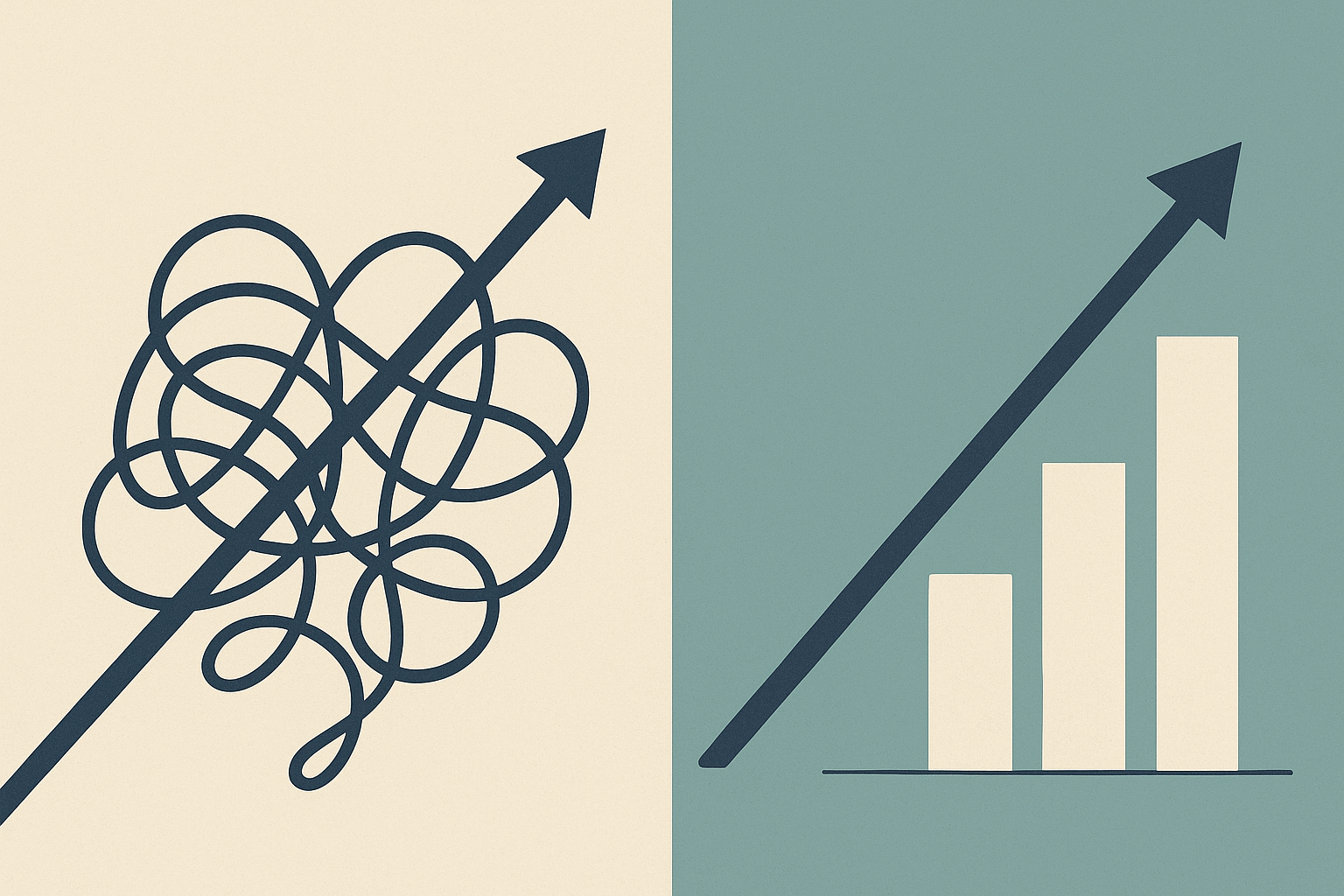
Avoiding common mistakes is just as important as knowing how to scale a B2B SaaS correctly.
How Much Does It Cost to Scale a SaaS Company?
Cost depends on stage, market, and ambition. However, the Rule of 40 is a useful benchmark. It says a company's growth rate plus profit margin should equal or exceed 40 percent. Founders can use it to check whether scaling spend is producing efficient growth, not just expensive growth.
In practice, most early-stage B2B SaaS companies reinvest a meaningful share of monthly recurring revenue into paid demand, creative production, and sales support. Your budget should cover media spend, tools, and the people running them. The U.S. Small Business Administration's guide to expanding a business similarly recommends treating growth spend as an investment tied to measurable return, not a fixed cost.
A Simple 90-Day Plan to Scale Your B2B SaaS
Plans work better when they have dates. Here is a practical way to sequence the work.
- Days 1 to 30: audit the funnel, name the bottleneck, define your ideal customer, and set up weekly revenue reporting.
- Days 31 to 60: launch intent-based campaigns, ship a first batch of new creative, and document the sales script.
- Days 61 to 90: add appointment setting, improve onboarding, test pricing, and cut spend on weak channels.
After that, repeat the cycle. Each loop should take one more task off the founder's plate.
Choosing a Partner to Scale Your SaaS
Founders who would rather not build this system from scratch can use a specialized growth partner to skip years of trial and error. SaaSLaunch, for example, has taken 14 SaaS companies past a million dollars in annual recurring revenue. It currently manages 1.8 million dollars a month in ad spend across its portfolio. That volume builds pattern recognition that is hard to replicate in-house.
That said, not every agency is built the same way. Our guide on choosing the right B2B SaaS marketing agency lists the questions to ask before signing. For a structured view of the whole process, read our founder's playbook on B2B SaaS growth system design. You can also visit saaslaunch.com to see current client results and book a call to review your own growth plan.

Choosing the right partner makes scaling a SaaS business far more predictable.
Frequently Asked Questions
What does it mean to scale a B2B SaaS company?
Scaling a B2B SaaS company means growing revenue faster than costs by building repeatable systems for demand generation, sales conversion, and retention. Unlike simple growth, the engine keeps working even as the founder steps back from daily involvement.
How do you know when your SaaS is ready to scale?
A SaaS is ready once it has product-market fit, low churn, a repeatable sales process, and evidence that paid demand converts profitably. Scaling before these exist usually wastes budget instead of growing it.
How long does it take to scale a SaaS company?
Most founders see meaningful pipeline improvements within 60 to 90 days once a proper demand and conversion system is in place. Full founder independence, however, typically takes six to twelve months of consistent execution.
How much does it cost to scale a B2B SaaS business?
Costs vary with ad spend, sales support, and creative production. Most early-stage companies invest a percentage of monthly recurring revenue into growth. A realistic budget covers media spend, tools, and the team that runs them.
What is the difference between SaaS growth and SaaS scaling?
Growth is any increase in revenue, even if it depends on the founder's effort. Scaling means revenue rises while the founder's involvement falls, because systems and processes do the work.
What metrics matter most when scaling a SaaS company?
Revenue, cost per demo, close rate, CAC payback, net revenue retention, and the Rule of 40 matter far more than impressions or click-through rate. They tie marketing activity directly to money in the bank.
What is the Rule of 40 in SaaS?
The Rule of 40 states that a healthy SaaS company's growth rate plus profit margin should equal or exceed 40 percent. Investors use it as a quick check on whether a company is scaling efficiently.
Can a B2B SaaS scale without paid advertising?
Yes. Some companies scale through organic content, partnerships, or product-led growth. These paths are usually slower and less predictable early on, so most founders combine paid demand with organic channels.
How do you scale a B2B SaaS without hiring a large internal team?
Many founders partner with a specialized growth team that already owns the playbooks, creative volume, and sales support. Automation of CRM, support, and billing also lets a small team do far more.
What should I look for in a SaaS growth partner?
Look for a partner who owns the full journey from first impression to closed revenue, not just clicks or leads. A proven record with other B2B SaaS companies, transparent reporting, and accountability to revenue are essential.
Final Thoughts
Ultimately, how to scale a B2B SaaS comes down to replacing guesswork with systems. Confirm you are ready, fix the real bottleneck, and sharpen your pricing and onboarding. Then build predictable demand, steady creative, and sales support that converts, and measure all of it by revenue. Once those pieces run without the founder, growth stops being a monthly surprise and starts being a decision. The next step is simply choosing to build the engine.